



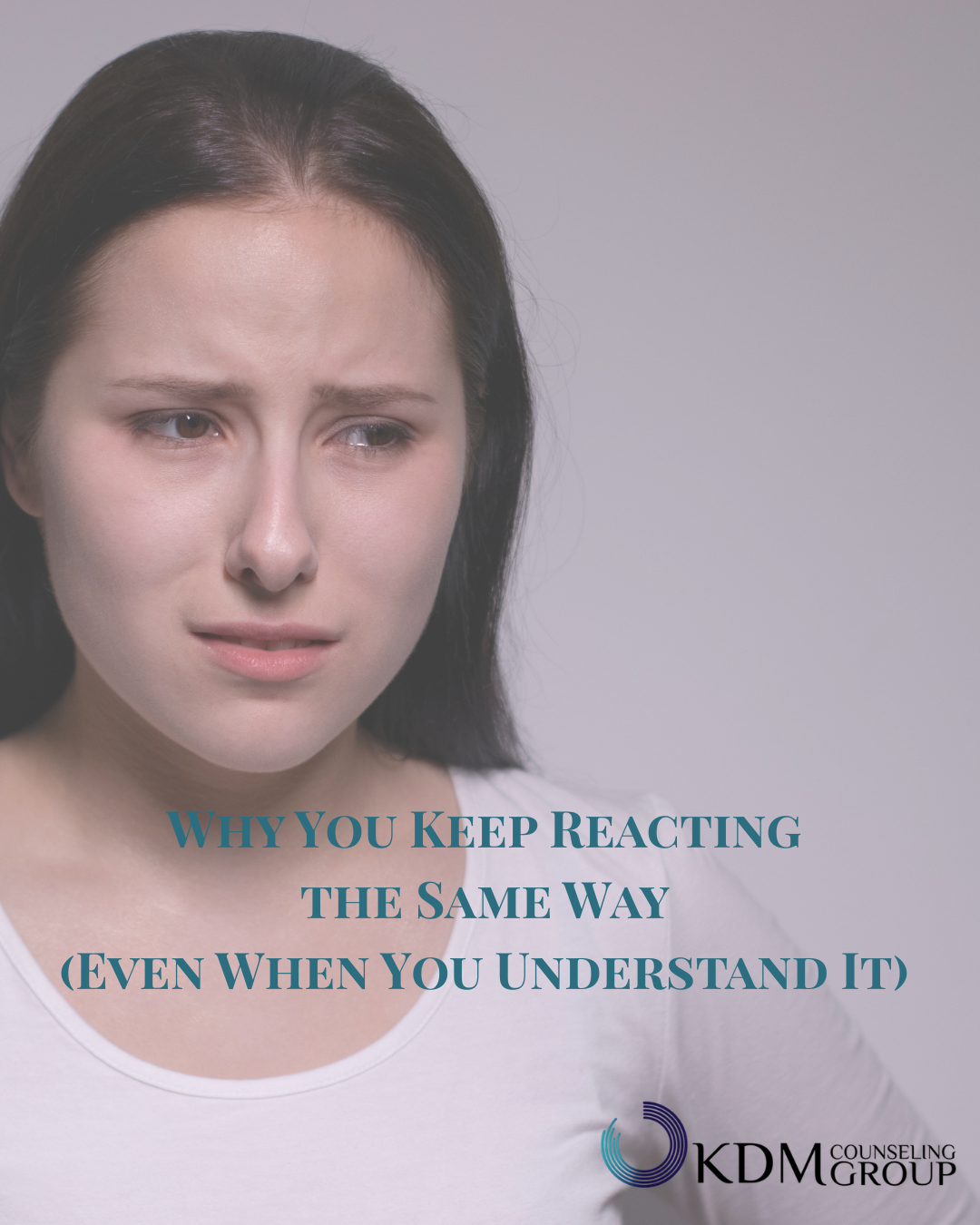
Why You Keep Reacting the Same Way (Even When You Understand It)
Many people come into therapy feeling frustrated with themselves.
They can clearly identify their patterns:
- “I get anxious and overthink everything.”
- “I shut down in conflict.”
- “I react quickly and regret it later.”
They understand why these patterns exist — often linking them to past experiences or stress.
Yet the pattern continues.
This can lead to a deeper question:
“If I understand it, why can’t I change it?”
The Role of the Nervous System
The answer lies in how the brain and body respond to stress.
When the nervous system perceives threat — whether real or emotional — it activates survival pathways:
- Fight (reactivity, defensiveness)
- Flight (anxiety, overthinking)
- Freeze (shutdown, depression)
These responses are automatic.
They happen faster than conscious thought.
This is why reactions can feel out of proportion or difficult to control.
Patterns Are Learned, Not Chosen
These responses are not random.
They are learned patterns developed over time, often in response to:
- Chronic stress
- Trauma
- Attachment experiences
- Repeated emotional environments
At some point, these patterns were adaptive.
They helped you cope, stay safe, or maintain connection.
The challenge is that they continue even when they are no longer needed.
Why Insight Isn’t Enough
Insight operates at the level of the thinking brain.
Patterns live in the nervous system.
This disconnect explains why:
- You can “know better” but still react the same way
- You can understand your partner but still feel triggered
- You can want to change but feel unable to do so
Lasting change requires working with the system that is generating the response.
How EMDR and Trauma-Informed Therapy Help
Therapies like EMDR address patterns at their source.
Rather than focusing only on behavior or thought patterns, EMDR:
- Helps the brain reprocess past experiences
- Reduces emotional intensity tied to triggers
- Allows new responses to emerge naturally
Clients often experience:
- Less reactivity
- More emotional flexibility
- Greater sense of control
Patterns in Relationships, Anxiety, and Parenting
These patterns don’t exist in isolation.
They show up:
- In couples dynamics (pursue/withdraw cycles)
- In anxiety (overactivation of the nervous system)
- In depression (shutdown and disconnection)
- In parenting (reactivity under stress)
Understanding this creates a more compassionate framework for change.
Moving Forward
You are not broken.
You are patterned.
And patterns can change — with the right support, pacing, and approach.