



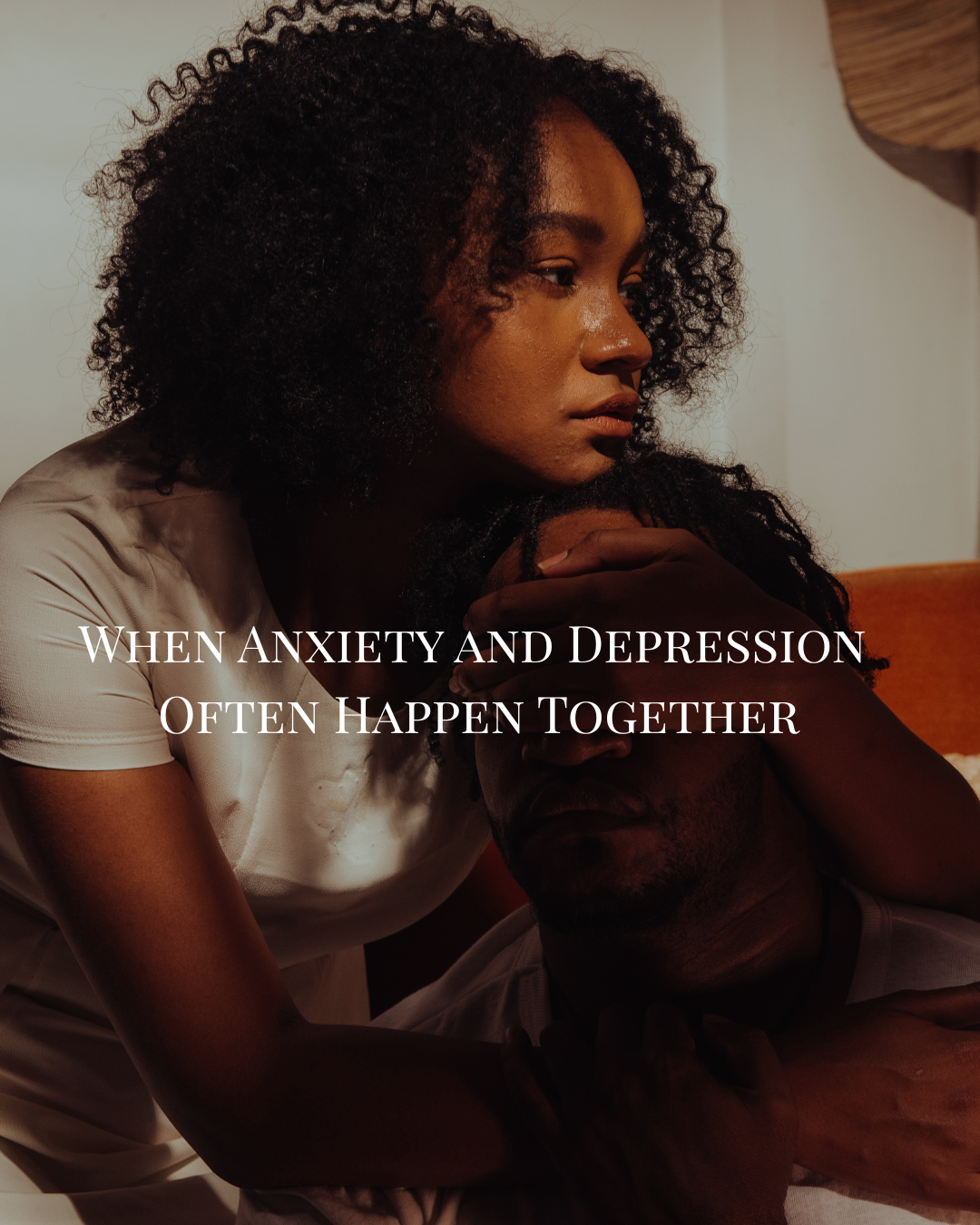
Why Anxiety and Depression Often Happen Together
Many people are surprised to find themselves experiencing both anxiety and depression at the same time.
They may feel:
- Constant mental activity and worry
- Paired with exhaustion or lack of motivation
- Moments of reactivity followed by shutdown
This can feel confusing.
However, from a nervous system perspective, it makes sense.
The Nervous System Under Stress
The nervous system is designed to respond to stress in ways that promote survival.
When activated, it moves into states such as:
- Fight (irritability, frustration)
- Flight (anxiety, overthinking)
- Freeze (shutdown, numbness)
When stress is short-term, the system returns to baseline.
But when stress is chronic, the system can become dysregulated.
The Shift from Anxiety to Shutdown
Many individuals begin in a state of heightened activation (anxiety). Over time, if the system becomes overwhelmed, it may shift into shutdown (depression).
This is not a failure — it is a protective adaptation.
The system is attempting to conserve energy and prevent further overload.
How This Impacts Relationships
This pattern often shows up in relationships as:
- Increased conflict or sensitivity
- Emotional withdrawal
- Difficulty staying present
- Miscommunication
Partners may misinterpret these shifts as lack of effort or care.
In reality, the nervous system is struggling to regulate.
The Role of Trauma and Unprocessed Experience
Chronic anxiety and depression are often linked to:
- Unprocessed stress
- Past trauma
- Repeated emotional environments
These experiences shape how the nervous system responds over time.
Without processing, the system continues to react as if the stress is ongoing.
How EMDR Supports Change
EMDR helps the brain process experiences that are contributing to current symptoms.
This leads to:
- Reduced emotional intensity
- Increased regulation
- Greater flexibility in responses
Instead of cycling between anxiety and shutdown, the system begins to stabilize.
Moving Toward Regulation
Healing involves helping the nervous system:
- Recognize safety
- Increase tolerance for emotion
- Develop more adaptive responses
This process takes time — but meaningful change is possible.